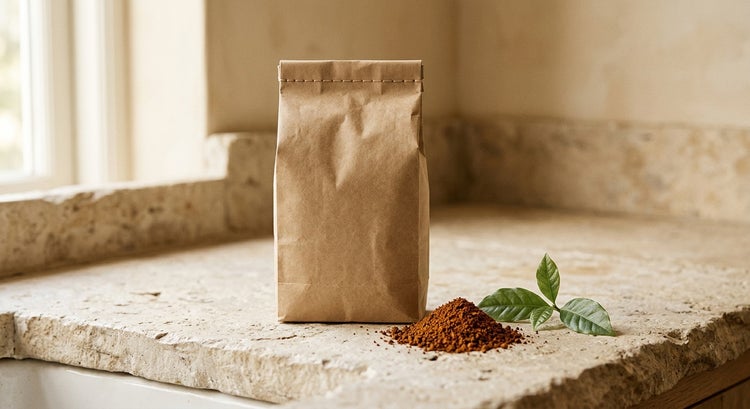
The label says "single origin." The bag has a farm name, a region, sometimes an elevation in metres and a tasting note that mentions stone fruit. It costs more than the bag next to it. The question worth asking is: does any of that matter once the water hits the grounds?
The short answer is yes. The longer answer explains why — and also what "single origin" actually means, because the term has been stretched so far in so many directions that it's worth pulling it back.
What the term actually means
At its most rigorous, single origin means coffee from one specific farm or cooperative — a place you could point to on a map — processed together in one batch. No blending with beans from other regions or farms. No mixing of harvest years. The result in the bag is a record of one place, one growing season, one set of decisions made by the people who farmed it.
In practice, the term is used more loosely. "Single origin" sometimes means a single country. Sometimes a region. Sometimes a cooperative that aggregates from dozens of small farms in the same valley. These are still meaningful distinctions — they're just not as precise. A coffee labelled "Ethiopia Yirgacheffe" might come from hundreds of smallholders. A coffee labelled with a specific farm name and lot number comes from one.
Both can be excellent. But they're different things.
Why traceability changes the cup
When you can trace a coffee back to a specific farm, you know what happened to it. The variety of plant, the altitude at which it was grown, the processing method — whether it was washed, natural, or honey-processed — and the conditions of that particular harvest. All of these affect flavour in ways that are distinct and reproducible.
A washed Kenyan coffee from a farm at 1,800m will taste different from a natural-processed Ethiopian from a farm at 2,100m. Not just slightly different: categorically different, in the way that a lemon is different from a plum. The processing method alone can shift a coffee from crisp and bright to deep and jammy.
Blends exist to achieve consistency — a roaster can maintain a house espresso blend profile by substituting origins as seasons change. Single origins are the opposite: they embrace variability. That's the point. The variation is the story.
What the Atelier does with this
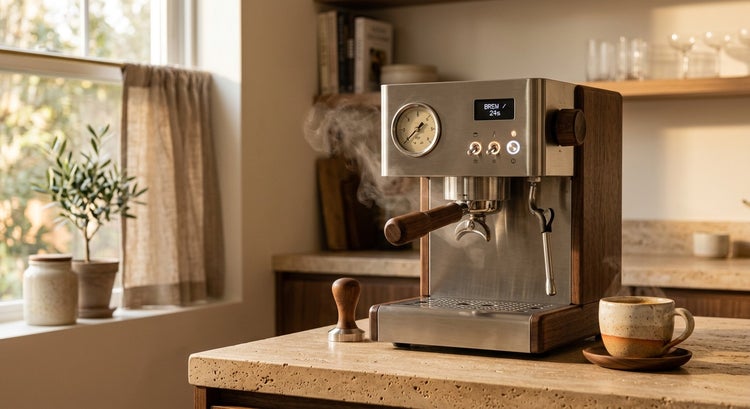
The Atelier's flavour profile system doesn't just track how you like your coffee brewed — it tracks what you've enjoyed. If you consistently rate single-origin Ethiopian naturals higher than blends with a similar roast level, it notices. Over time, it weights your recommendations accordingly.
The single-origin coffees in the Fréscopa range are sourced with farm-level traceability. The origin notes on each bag are descriptive of what we actually find in the cup, not marketing aspiration.
A note on price
Single-origin coffees cost more, and the reason is mostly honest: they're harder to produce consistently. A farm producing a traceable lot that a roaster will buy at a premium has to maintain quality across every step — picking only ripe cherries, processing carefully, storing correctly. The extra cost reflects extra care.
It also flows back to the farm. Traceable, high-quality lots command better prices for producers. This is one of the more direct ways that paying more for a bag of good coffee connects to something real on the other end of the supply chain.
The cup is better. The economics are better. That's not always how it works in food and drink, but it tends to hold for specialty coffee.
More from the journal
Sustainability
Nothing wasted, right down to the grounds
Where your spent coffee goes after the cup — and how the Atelier keeps track.
Mar 2026 · 4 min
The Atelier
How the Atelier learns your taste
It doesn't guess, and it doesn't need a questionnaire. Here's what actually happens in the first two weeks.
June 2026 · 6 min